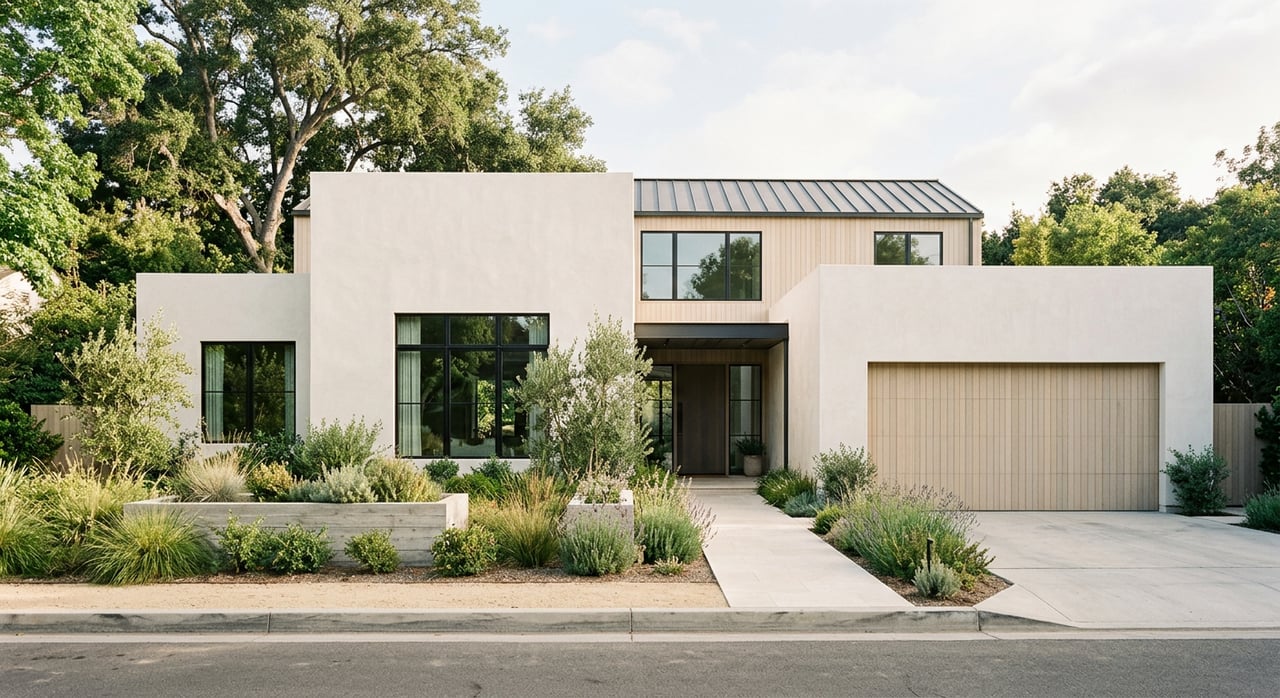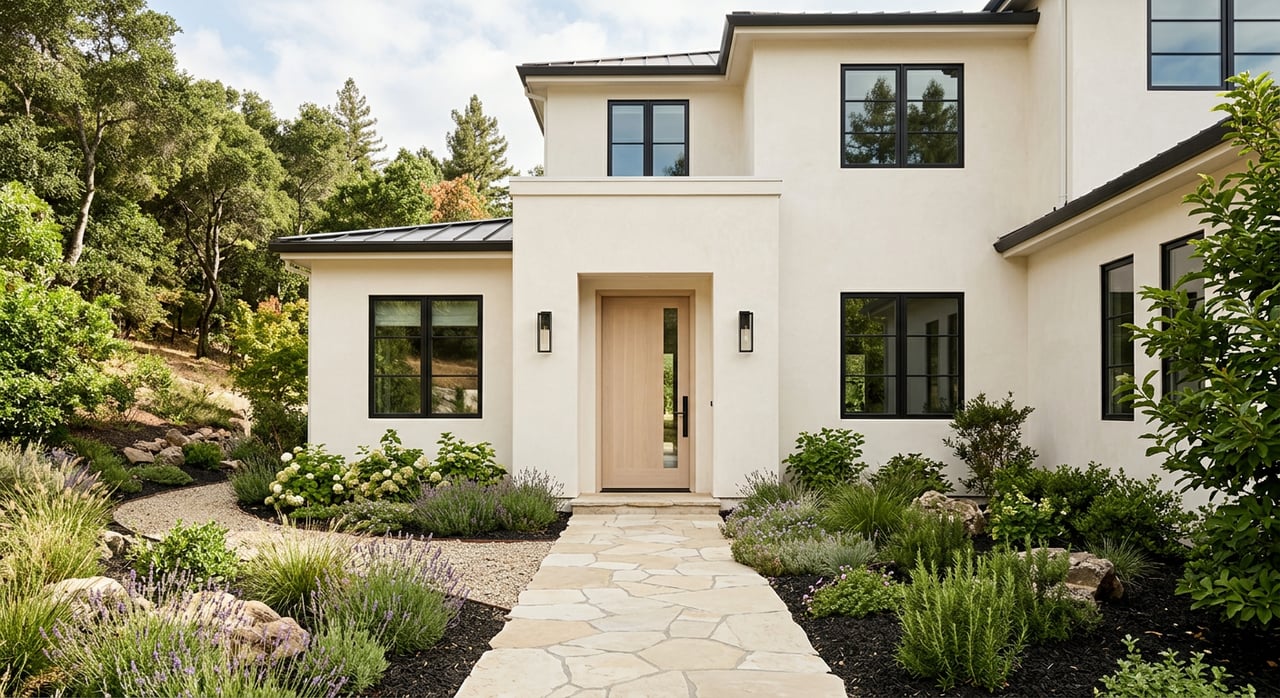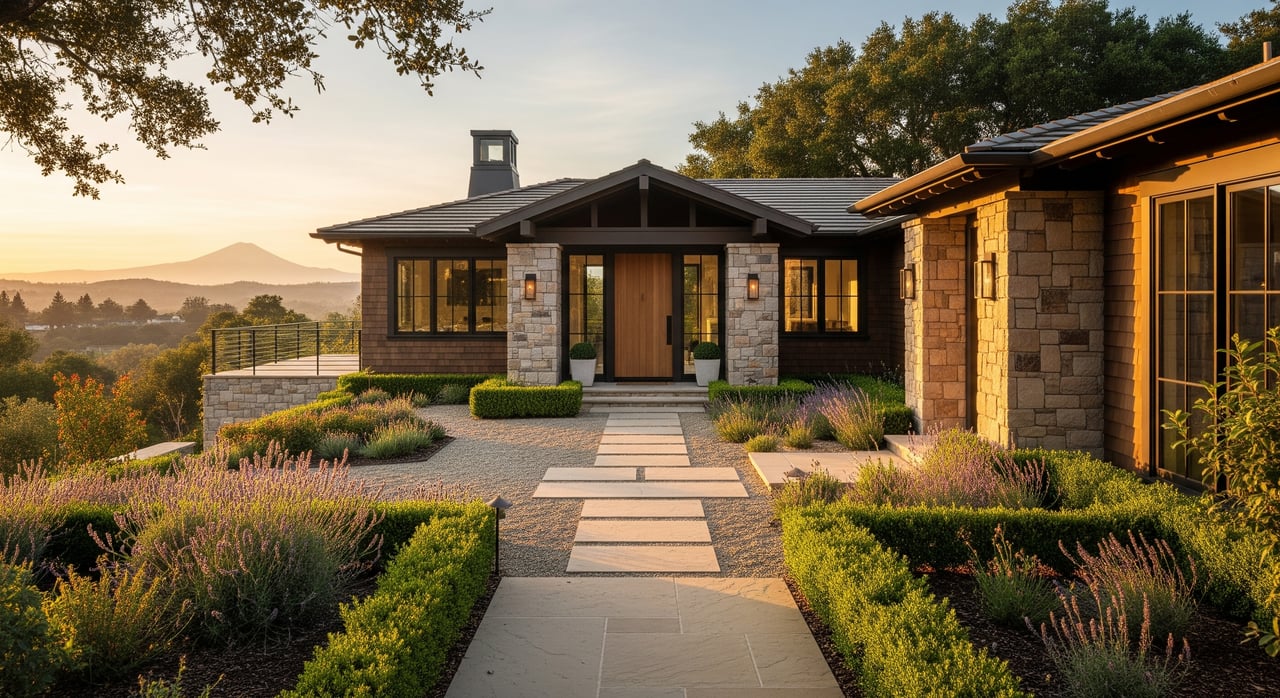

Ask a title company to pull the plat map along Rose Avenue and you will find something odd. Somewhere along that block, the property line running down the middle of the street stops being just a property line and starts being a city limit. One side is Piedmont. The other is Oakland. Same block, same trees, same view of the same hills. Different city.
That is not a quirk of geography. It is a paperwork accident. When Piedmont incorporated in 1907, the people drawing its boundaries grabbed the map they had on hand, which happened to be a map of the sewer lines running under the neighborhood. Sewer lines do not follow streets. They follow gravity and pipe runs. So the border they created snakes through the area in ways that split roughly 136 parcels between the two cities, sometimes cutting through the middle of a single lot, according to Bay Curious historians Dorothy Lazard and Ann Swift, who dug into the story for KQED.
That century-old cartographic shortcut is not just trivia for a real estate agent to drop at a dinner party. It is the reason two houses that look identical, sit on the same street, and share a fence line can carry meaningfully different costs to close, different annual tax bills, and, as of this November, different math depending on how two separate cities vote.
What one side of the street pays that the other doesn't
Start with the number that hits at the closing table: the real property transfer tax. This is the one-time tax charged when a home changes hands, and in Piedmont it has sat untouched for 33 years, according to reporting from Piedmont Exedra. The current rate is $13.00 per $1,000 of sale price, or 1.3%, straight from the city's own finance page.
Oakland's version works differently. Oakland's published budget information says the city charged a flat 1.5% rate through the end of 2018 and that voters approved Measure X in November 2018, replacing it with progressive rates that climb as the sale price climbs. On a multimillion-dollar home, the kind that typifies both Piedmont and its bordering Oakland streets, that structure lands well above what Piedmont currently charges.
This is not an abstract gap. Piedmont's own Budget Advisory and Financial Planning Committee flagged it directly: when measured against comparable sale prices, Piedmont's current transfer tax rate sits lower than Albany, Berkeley, Emeryville, and Oakland. That finding is what put a ballot measure in front of Piedmont voters this November, asking whether to raise the rate from 1.3% to 1.75%, or $17.50 per $1,000. Here is what that shift means in real dollars if voters approve it and it takes effect on July 1, 2027, as written:
| Sale Price | Today (1.3%) | If Approved (1.75%) | Difference |
|---|---|---|---|
| $2,000,000 | $26,000 | $35,000 | $9,000 |
| $3,000,000 | $39,000 | $52,500 | $13,500 |
| $4,500,000 | $58,500 | $78,750 | $20,250 |
A similar increase to 1.75% went before Piedmont voters once already, in 2020, and narrowly failed. This time the city's pitch is explicit: bring the rate closer to what Oakland, Berkeley, and Albany already charge, and generate roughly $1.5 million a year for police, fire, emergency response, and the maintenance backlog on aging buildings, parks, and storm drains, according to the ballot language reported by Piedmont Exedra.
The tax that renews just to keep the lights on
The transfer tax is a one-time event. The parcel tax is not, and it is arguably the bigger piece of what a Piedmont address actually costs over time.
Piedmont Unified School District is its own district, separate from Oakland Unified, and it funds a meaningful share of its budget through parcel taxes that Piedmont voters have approved and re-approved since 1985. The current base tax, known as Measure G, charges a flat $3,051 per parcel and generates $11.9 million a year, which works out to 21% of the district's entire general fund budget. Stacked on top of that is Measure P, passed by voters in November 2024, which doubled a separate square-footage-based tax from $0.25 to $0.50 per building square foot, meaning larger homes contribute proportionally more.
Why does one small district need to lean this hard on locally approved taxes just to function? Part of the answer is structural. California's Local Control Funding Formula allocates state dollars in part based on the share of higher-need students a district serves, things like English learners, foster youth, and low-income households. A district with a smaller share of those students receives comparatively less state funding per pupil, which is exactly the dynamic Piedmont Unified has cited as a reason it depends on parcel tax renewals to cover basic costs like teacher salaries and healthcare contributions.
Piedmont voters keep saying yes. A November 2025 survey by True North Research found more than 80% of respondents supported renewing Measure G at its current rate, and the district's board moved toward placing that renewal on the ballot well ahead of the measure's 2028 expiration. That level of support is not incidental. It is the mechanism that keeps the district's revenue base intact year after year, and it is a cost that follows the property, not the transaction, for as long as you own it.
Two cities, one ballot
Here is the part that makes this November unusually interesting if you are actually comparing a Piedmont listing against something two blocks away in Crocker Highlands or Montclair. Piedmont is not the only city rewriting its transfer tax rules this fall. Piedmont Exedra reports that Oakland's City Council voted to place a transfer tax reform measure on the November ballot, authored by Councilmember Charlene Wang and aimed at closing foreclosure-exemption loopholes in the existing tax code. City estimates put the added revenue from that change somewhere between $4 million and $13 million.
So the gap between the two sides of that Piedmont line is not fixed. It is being actively renegotiated by two separate electorates, on two separate ballot measures, in the same election. If Piedmont's measure passes and Oakland's does too, the relative spread between the two cities' transfer taxes could look different in 2027 than it does today, and not necessarily in the direction either side assumes.
What the premium is actually buying
None of this means Piedmont and its bordering Oakland streets are interchangeable, or that the difference in price is only about tax lines on a closing statement. Piedmont runs its own police and fire departments, its own parks maintenance, and its own permitting and design review process, all funded through a mix of property tax, the parcel taxes above, and that transfer tax now up for a vote. The city's major through streets, Oakland Avenue, Highland Avenue, and Moraga Avenue, sit inside a roughly 1.7-square-mile footprint where those services are administered independently of the much larger city that surrounds it on every side.
What the research does support is a more precise claim than "Piedmont costs more because it's Piedmont." The premium is a stack of specific, named, votable line items, some one-time and some annual, and both halves of that stack are currently in motion. A buyer weighing a Piedmont listing against a comparable Oakland-side property this fall is not just comparing square footage and lot depth. They are comparing two tax structures mid-revision, in the same election cycle, with real dollar consequences depending on when escrow closes relative to July 1, 2027.
Piedmont's own median sale price has hovered near $2.6 million this year, per recent reporting from the San Francisco Chronicle. That number gets repeated often. What gets repeated less often is that a meaningful piece of what separates that number from a comparable listing across Rose Avenue is sitting on a ballot right now, waiting on two different sets of voters to decide.
A few questions worth asking before you write an offer
If I'm under contract in Piedmont before July 2027, does the higher transfer tax rate apply to me? Based on the ballot language reported by Piedmont Exedra, the increase to 1.75% would take effect July 1, 2027, only if voters approve it this November. A sale that closes before that date would still be taxed at the current 1.3% rate.
Who actually pays the transfer tax, the buyer or the seller? In Alameda County, city transfer taxes are typically split between buyer and seller, but the city's own materials note that individual buyers and sellers are free to negotiate a different arrangement in the purchase contract.
Numbers like these rarely show up on a listing sheet, and they rarely get explained by anyone who isn't already deep in an East Bay transaction. If you are weighing a Piedmont address against a comparable Oakland-side street this fall, or preparing to sell on either side of that line before the vote, it helps to run the real math with someone who tracks these mechanics as closely as the architecture. Hope Broderick & Co can walk you through exactly what a specific property, on a specific side of that border, will cost you at closing and beyond. Start your home transformation with a conversation grounded in the actual numbers, not the folklore.
This article is general information, not legal, tax or financial advice. Consult a qualified professional about your situation.